מדידת התנגדות אוהמית בתאי דלק – שיטות, אתגרים ומשמעות לתעשייה
מאמר מאת K.R. Cooper ו- M. Smith
תאי דלק ממשיכים לתפוס מקום מרכזי בפיתוח טכנולוגיות אנרגיה מתקדמות בזכות היכולת להפיק אנרגיה חשמלית ביעילות גבוהה ובפליטות נמוכות. עם התקדמות היישומים בתחומי הרכב, האנרגיה הנייחת והתעשייה, עולה גם החשיבות של כלי מדידה ואבחון מדויקים המאפשרים להבין את ביצועי התא ולנטר את מצבו בזמן אמת.
אחד הפרמטרים החשובים ביותר בביצועי תא דלק הוא ההתנגדות האוהמית (Ohmic Resistance). גם שינויים קטנים בהתנגדות הפנימית של המערכת יכולים לגרום לירידה משמעותית ביעילות, במיוחד בתנאי עבודה הכוללים צפיפות זרם גבוהה. ההתנגדות הכוללת מושפעת ממספר גורמים ובהם:
- הולכת יונים דרך הממברנה
- הולכת אלקטרונים דרך רכיבי התא
- התנגדויות מגע בין רכיבים שונים
- שינויים בתנאי ההפעלה כגון טמפרטורה, לחות וצפיפות זרם
במאמר של Cooper ו-Smith משנת 2006, Electrical Test Methods for On-line Fuel Cell Ohmic Resistance Measurement, מוצגת השוואה מעמיקה בין מספר שיטות מדידה המשמשות להערכת ההתנגדות האוהמית של תאי דלק בזמן פעולה.
המאמר סוקר ארבע גישות מרכזיות:
Current Interrupt (CI)
שיטה המבוססת על הפסקה מהירה של הזרם ומדידת תגובת המתח.
AC Resistance
מדידת התנגדות באמצעות אות AC בתדר יחיד.
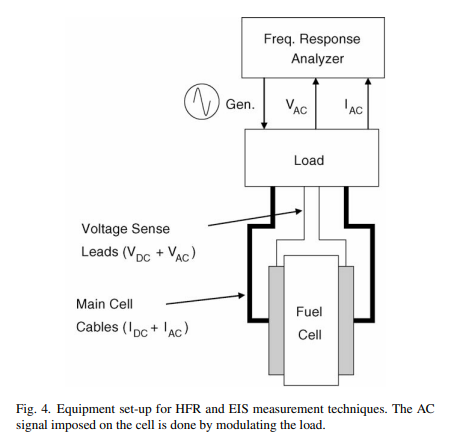
High Frequency Resistance (HFR)
מדידה באמצעות אות בתדר גבוה לצורך בידוד הרכיב האוהמי של המערכת.
Electrochemical Impedance Spectroscopy (EIS)
שיטה מתקדמת המבצעת סריקה בטווח רחב של תדרים ומספקת תמונה מלאה של תהליכים אלקטרוכימיים במערכת.
Fuel Cells continue to play a central role in the development of advanced energy technologies due to their ability to generate electrical energy with high efficiency and low emissions. As applications in transportation, stationary power generation, and industrial sectors continue to expand, the importance of accurate measurement and diagnostic tools for understanding fuel cell performance and monitoring system conditions in real time is also increasing.
One of the most critical parameters affecting fuel cell performance is ohmic resistance. Even small variations in the system's internal resistance can lead to a significant reduction in efficiency, particularly under operating conditions involving high current densities. The total resistance is influenced by several factors, including:
- Ionic conduction through the membrane
- Electronic conduction through fuel cell components
- Contact resistance between different cell components
- Changes in operating conditions such as temperature, humidity, and current density
In the 2006 article by Cooper and Smith, Electrical Test Methods for On-line Fuel Cell Ohmic Resistance Measurement, an in-depth comparison is presented between several measurement methods used to evaluate the ohmic resistance of fuel cells during operation.
The article reviews four major approaches:
Current Interrupt (CI)
A method based on rapidly interrupting the current and measuring the resulting voltage response.
AC Resistance
Resistance measurement using a single-frequency AC signal.
High Frequency Resistance (HFR)
A measurement technique using a high-frequency signal to isolate the ohmic component of the system.
Electrochemical Impedance Spectroscopy (EIS)
An advanced technique that performs measurements across a broad frequency range, providing a comprehensive view of the electrochemical processes occurring within the system.
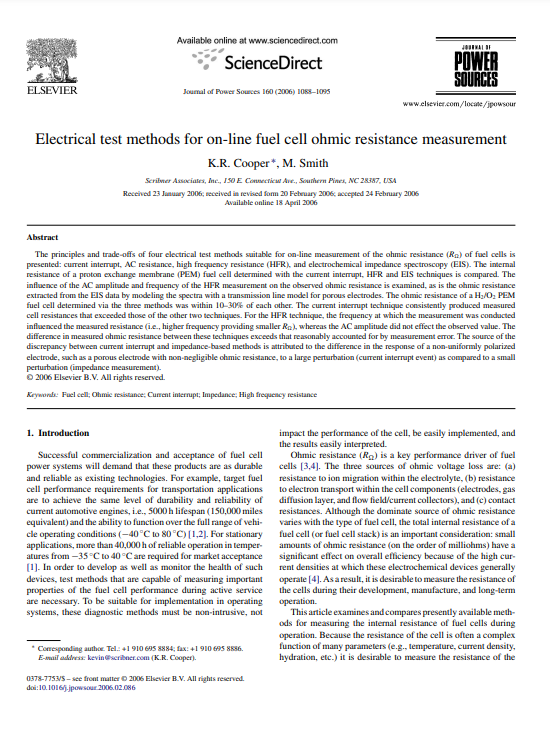
לחצו על התמונה להצגת המאמר המלא:
אחד הממצאים המרכזיים של המחקר הוא שהשיטות השונות אינן בהכרח מספקות ערכים זהים של התנגדות פנימית, גם כאשר כולן מודדות את אותו תא דלק ובאותם תנאי עבודה.
המחקר הראה כי:
- ערכי ההתנגדות שהתקבלו בשיטות שונות היו שונים בכ-10–30%
- מדידות Current Interrupt נטו להציג ערכים גבוהים יותר
- תוצאות HFR היו תלויות בתדר המדידה
- שיטות מבוססות EIS סיפקו הבנה עמוקה יותר של תהליכים פנימיים במערכת
המשמעות היא שמעבר לבחירת שיטת המדידה עצמה, חשוב להבין את מגבלות השיטה ואת האופן שבו מפרשים את הנתונים.
בתהליכי פיתוח, ייצור וניטור ארוך טווח של תאי דלק, מדידות התנגדות אינן רק ערך מספרי — הן כלי אבחוני חשוב. ניטור מדויק מאפשר:
- זיהוי מוקדם של ירידת ביצועים
- הערכת מצב הממברנה והאלקטרודות
- אופטימיזציה של תנאי עבודה
- שיפור אמינות וחיי מערכת
- פיתוח מערכות בקרה וניטור בזמן אמת
ככל שמערכות אנרגיה אלקטרוכימיות הופכות מורכבות יותר, טכניקות מדידה מתקדמות כמו EIS הופכות לכלי מרכזי בהבנת התנהגות המערכת ובהבטחת ביצועים לאורך זמן.
ב-Bioanalytics אנו מספקים פתרונות מדידה וניתוח מתקדמים המאפשרים לחוקרים ולמהנדסים לבצע אפיון מדויק של מערכות אלקטרוכימיות ותאי דלק, החל ממדידות בסיסיות ועד ניתוחי EIS מתקדמים.
One of the key findings of the study is that different measurement methods do not necessarily provide identical values of internal resistance, even when all of them are measuring the same fuel cell under identical operating conditions.
The study demonstrated that:
- Resistance values obtained using different methods varied by approximately 10–30%
- Current Interrupt (CI) measurements tended to produce higher resistance values
- High Frequency Resistance (HFR) results were dependent on the measurement frequency
- Electrochemical Impedance Spectroscopy (EIS) methods provided deeper insight into internal processes occurring within the system
This highlights that, beyond selecting a measurement method, it is equally important to understand the limitations of each technique and how the resulting data should be interpreted.
During fuel cell development, manufacturing, and long-term monitoring processes, resistance measurements are more than just numerical values — they serve as an important diagnostic tool. Accurate monitoring enables:
- Early detection of performance degradation
- Evaluation of membrane and electrode conditions
- Optimization of operating conditions
- Improvement of system reliability and lifetime
- Development of real-time monitoring and control systems
As electrochemical energy systems continue to become more complex, advanced measurement techniques such as Electrochemical Impedance Spectroscopy (EIS) are becoming essential tools for understanding system behavior and ensuring long-term performance.
At Bioanalytics, we provide advanced measurement and analysis solutions that enable researchers and engineers to perform accurate characterization of electrochemical systems and fuel cells, ranging from basic measurements to advanced EIS analysis.